Building Balance with Ease
A simple way to support your body when energy, time, or motivation feel low.
There are seasons in life when food feels simple and steady, and there are seasons when it feels like one more thing to figure out. For many women, especially through peri-menopause and beyond, energy can feel inconsistent and what used to “work” may not feel the same anymore. It’s very normal for your hunger to shift. In these moments, it’s important to have a structure you can lean on when things feel off because when motivation is low or time is tight, structure tends to work better than willpower.
This is where a simple approach to building a meal can make a real difference.
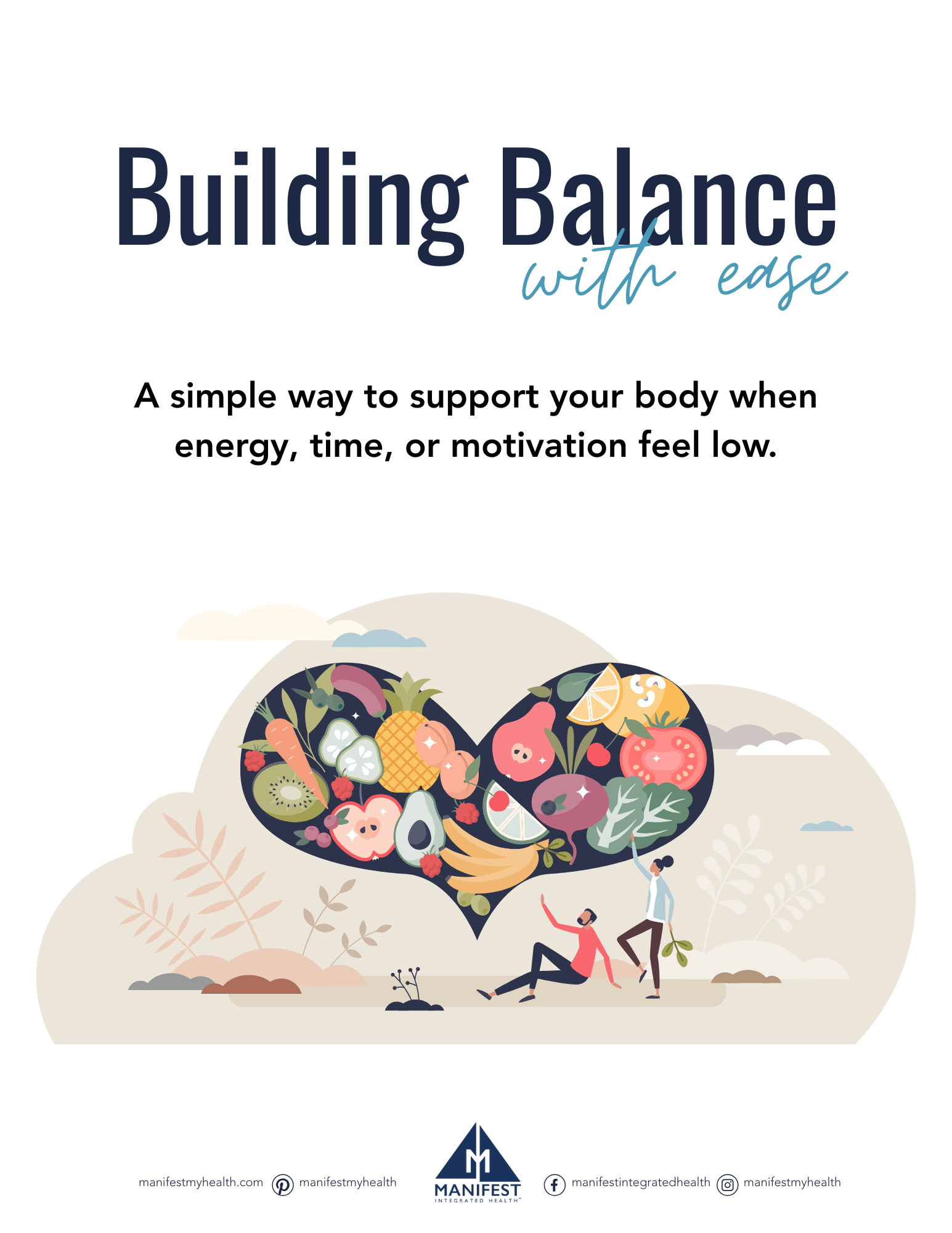
Step 1: Start with a Protein (Your Anchor)
The first place to look is protein. Think of it as the anchor that helps your meal feel more complete and satisfying. Before you add anything else, take a moment to notice what is already available to you. Maybe it is eggs in the fridge, leftover chicken, a container of yogurt, or something in the pantry like beans or tuna.
When protein is missing, meals often leave you feeling like something is still off. You might find yourself reaching for more food shortly after eating or feeling like your energy drops too quickly. When it is included, things tend to feel more steady.
Ask:“What protein do I already have?”
Choose ONE
Pantry / Freezer / Fridge Options
Eggs or egg whites
Greek yogurt or cottage cheese
Canned tuna or salmon
Rotisserie or leftover chicken
Tofu or tempeh
Beans, edamame, lentils
Protein powder (limit unnecessary additives)
Power Goal:
Meals: ~20–30g protein
Snacks: ~10–15g protein
If protein is missing, the meal won’t “stick.”
Step 2: Add Color and Fiber
Once you have your base, look for a way to bring in color. This is where fruits and vegetables come in, and there is no need to overthink it. It could be a handful of spinach added to eggs, sliced cucumbers on the side, berries with yogurt, or roasted vegetables you already have prepped. Every color brings something different and it can be much easier than you are making it out to be.
This step supports digestion, adds fiber, and brings a sense of balance to the plate without needing anything complicated.
Ask:“What fruit or vegetable can I add?”
Choose 1–2 (more is always welcome)
Fresh or Frozen: there is no such thing as a ‘bad color’. All fruits & vegetables have purpose!
Leafy greens (spinach, arugula, mixed greens)
Bell peppers, carrots, cucumbers
Broccoli, cauliflower, Brussels sprouts
Berries, apples, citrus, bananas, kiwi
STEP 3: Choose Your Fiber-Forward Carbohydrate (Optional, but purposeful)
Some days, you may need a little more staying power. Other days, you may feel fine without it. This is where you can pause and ask yourself if you need something more to carry you through the next few hours.
Whole grains, beans, lentils, or starchy vegetables can offer that extra support. They help keep energy more steady and can make a meal feel more complete, especially if you know you have a longer stretch before your next meal.
Ask:“Do I need more staying power or energy?”
Choose ONE if desired:
Whole grains (oats, quinoa, brown rice, farro)
Beans or lentils
Starchy vegetables (potato, sweet potato, squash, corn)
Whole-grain bread or crackers
Fiber helps with fullness, blood sugar stability, and gut health
Step 4: Finish with a Healthy Fat (Flavor + Satisfaction)
Food is about so much more than just nutrients! You want to feel satisfied too. A drizzle of olive oil, a few slices of avocado, a handful of nuts, or even a sprinkle of cheese can completely change how a meal feels. These additions bring flavor and help meals feel more enjoyable, which matters more than we often give it credit for. When meals feel satisfying, it becomes easier to stay in a steady rhythm instead of feeling like you need to keep searching for something else.
Ask:“What will make this satisfying?”
Add 1–2:
Olive oil
Avocado
Nuts or seeds
Nut or seed butter
Cheese or tahini
Step 5: Eat with Rhythm
One of the most supportive things you can do for your body is to create some consistency around when you eat.
This does not have to be rigid or exact, but giving your body a general pattern to rely on can help everything feel more predictable and hunger becomes easier to recognize. A schedule of some sort can prevent your energy from going up and down and your digestion to be well managed.
Long gaps followed by constant grazing can leave your system feeling confused. A more regular rhythm gives your body a sense of safety and allows it to function more smoothly.
Ask:“When did I last eat?”
Aim to eat every 3–4 hours
Avoid skipping → grazing → crashing cycles
Regular meals = metabolic safety
A simple shift that adds up
This approach can help your body have something to come back to when things might feel scattered. When you can look at what you already have and build a meal in a way that supports your body, it takes the pressure off and becomes less about doing everything “right” and more about doing what feels steady and supportive in the moment.
If your routine has felt off lately, this can be a place to start. Just start with one meal, decision, or small shift toward something that works with your body instead of against it.